Time
How recent
is this fish?
Licious · Building trust
You can’t touch the fish.
You should still feel sure.
The starting point
I was given “Freshness”, and the room to work out what that should mean for the experience.
My role
With no PM on the project, I independently framed the problem, developed the direction, explored the approaches and designed the UX and UI.
Understanding freshness
It depends on who you ask.
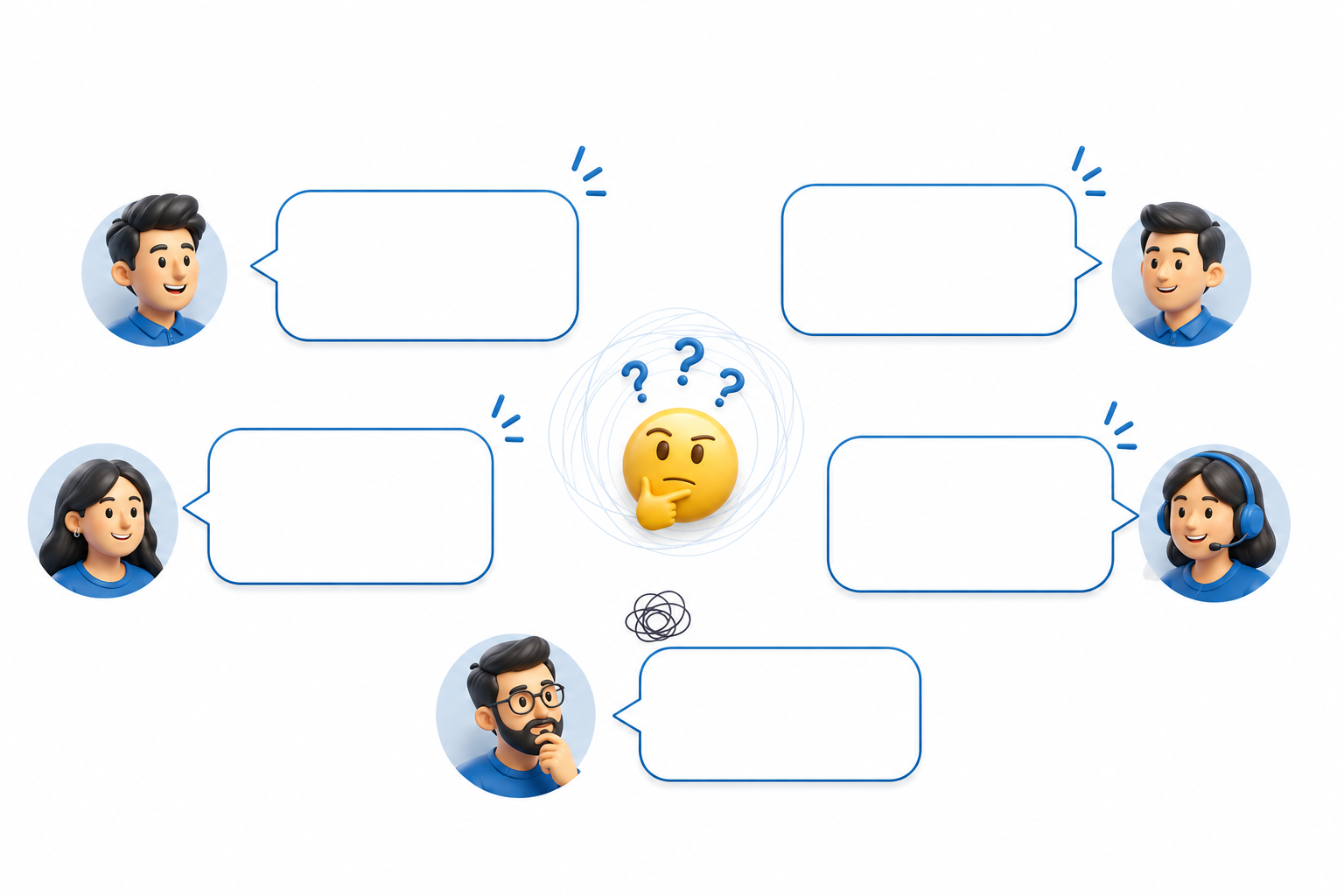
“Within 24 hours
of the catch.”
“The cold chain
is maintained.”
“Always fresh.
Never frozen.”
“A refund if
it isn’t good.”
and for design?Time, temperature, process and delivery all matter.
And freshness is still a perception.
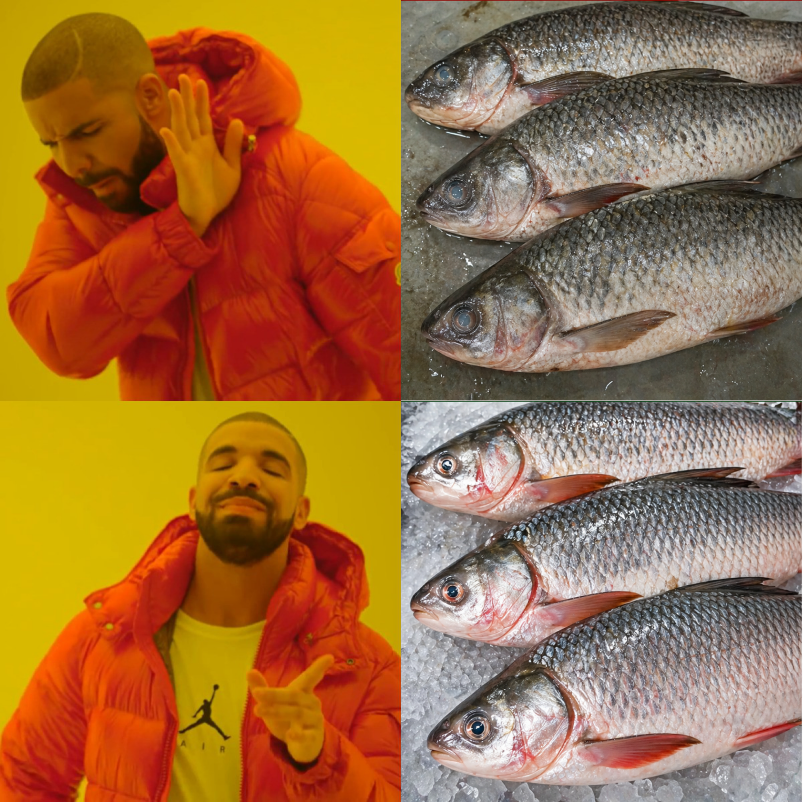
A customer doesn’t see the cold chain or the process. They see the fish, and form an impression.
freshness is a perception.
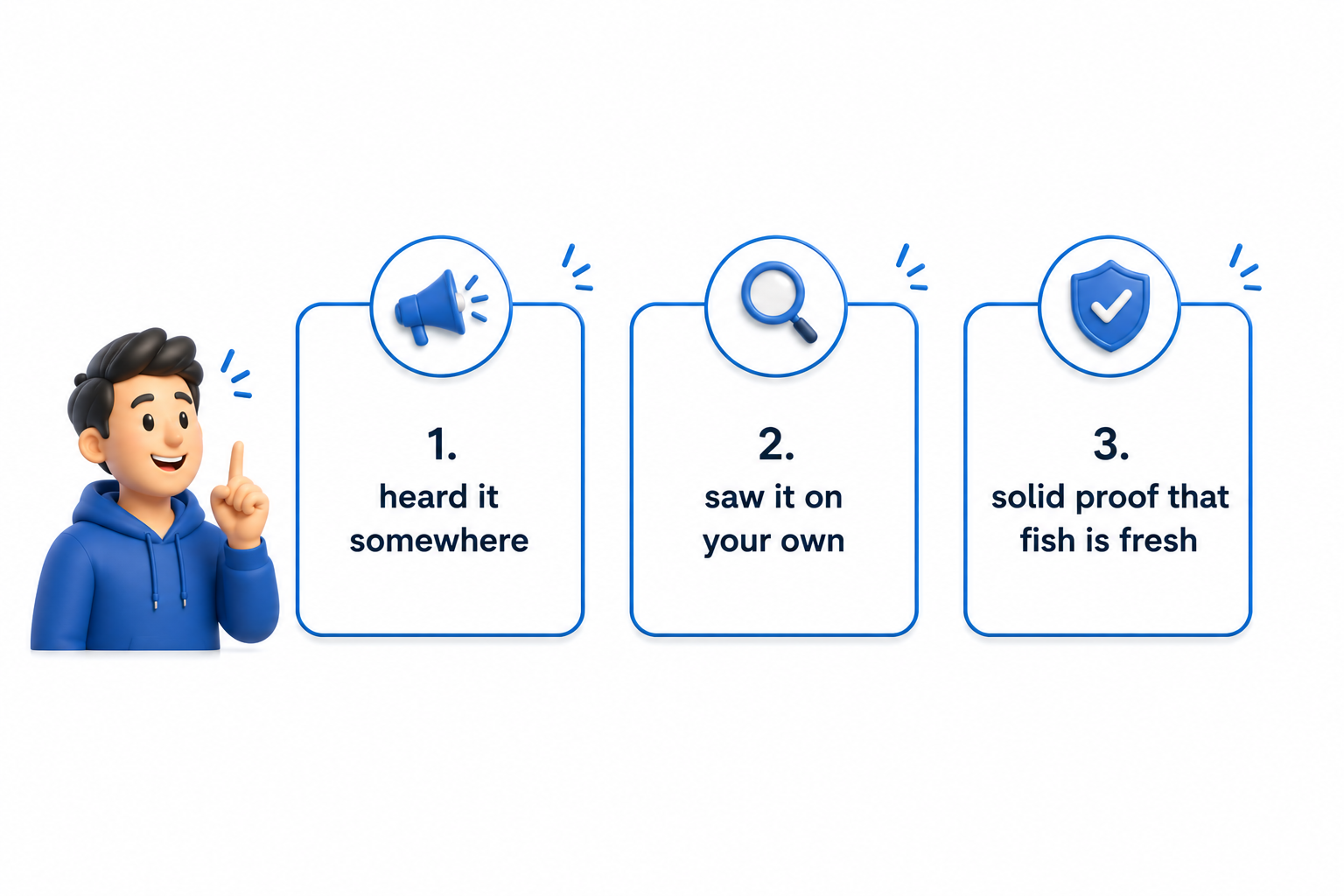
Someone else had
a good experience.
I could check
for myself.
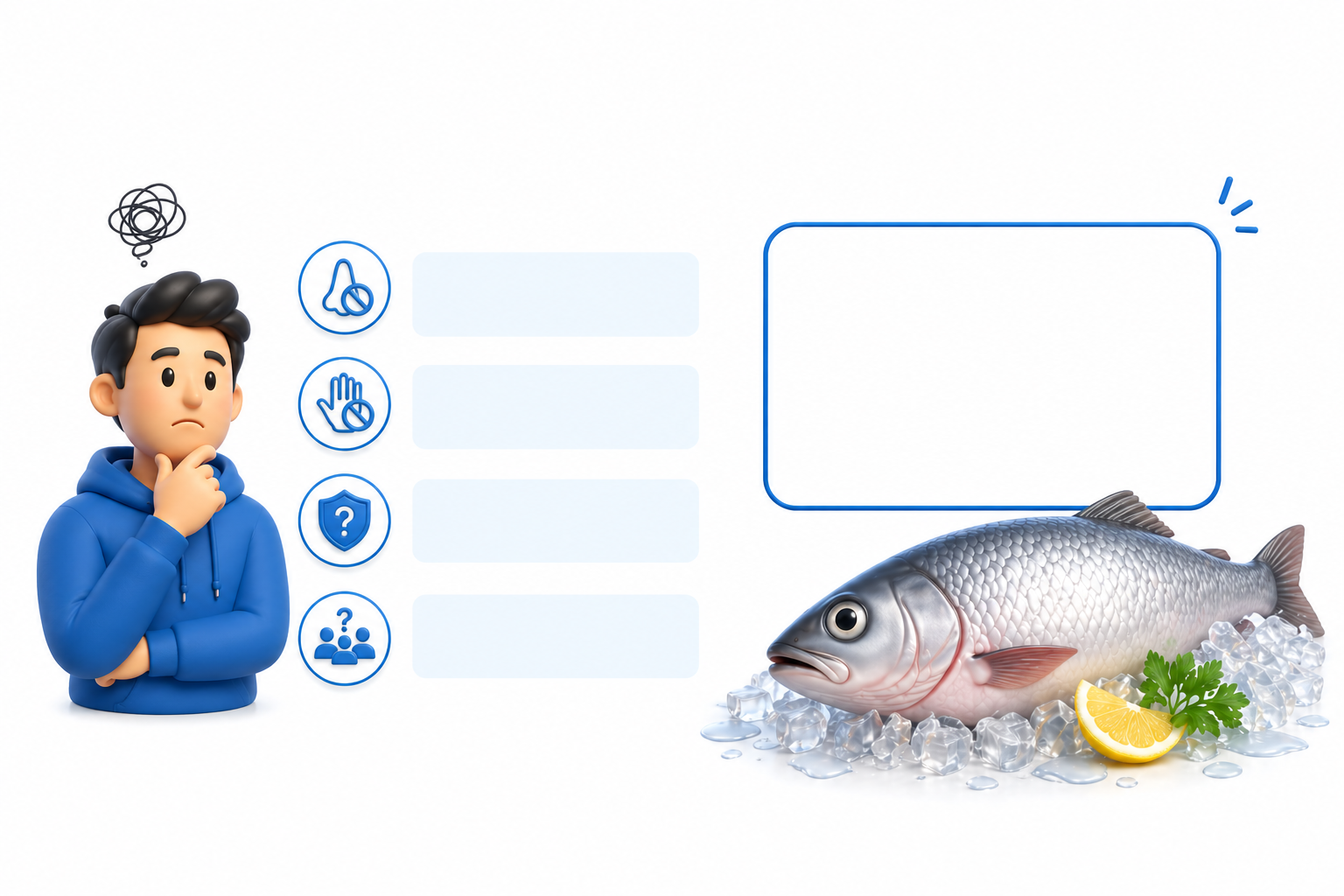 No smellNo touchNo visibilityNo one said
No smell, no touch, no view of the process, no one else’s experience to go by.
but… is it really fresh?The gap in the current approach
A freshness claim doesn’t automatically become
freshness in the customer’s mind.
I broke freshness down into five questions a customer might ask.
How recent
is this fish?
What can
I inspect?
How was
it handled?
What do
others say?
What reduces
my worry?
“Is it fresh?”
“Here’s how you can be sure.”
I gave each offline check a place in FnS: customer stories, sourcing dates, handling history and a view of the batch.
Proof
In a shop, another person’s experience can reassure us. Online, a freshness promise was mostly coming from the brand itself.
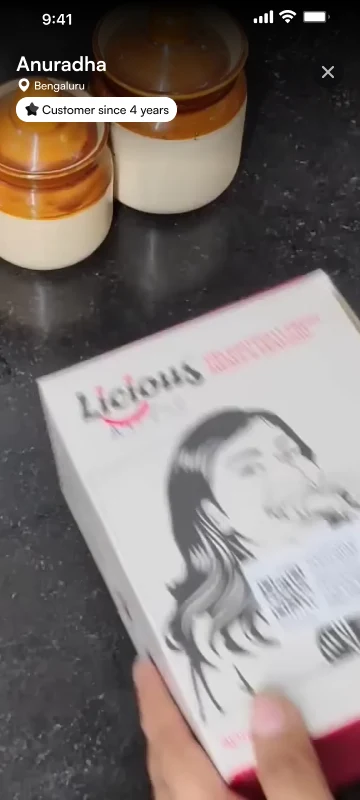
Customer stories bring that outside perspective into the FnS page.
“Someone else has tried it.”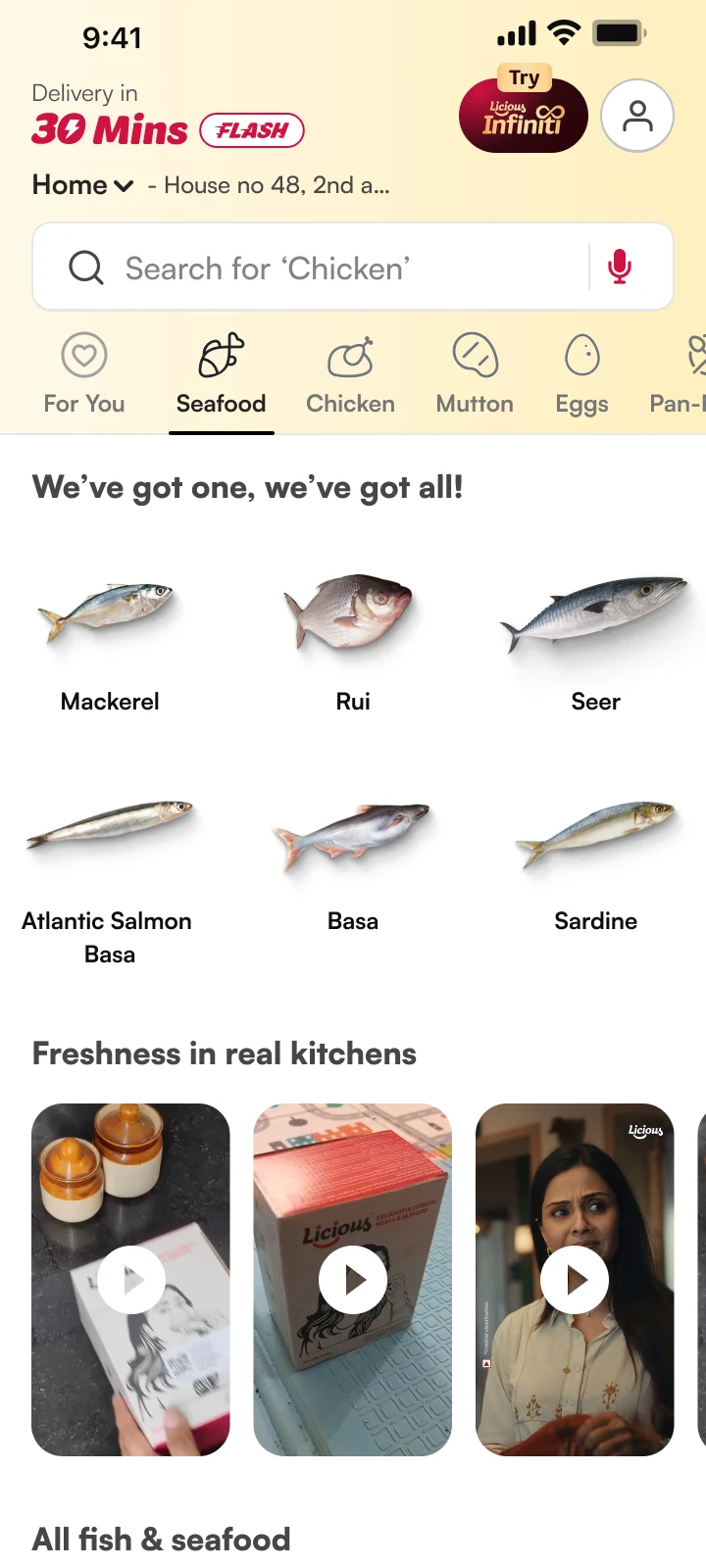
Time
“When did this fish arrive?” is a natural question at the counter. The answer needs to be visible before someone opens a product.
I added “Today’s batch” to the existing FnS cards. It connects the available stock to today’s sourcing, putting a specific time cue beside the fish and its price.
a date, not another promise.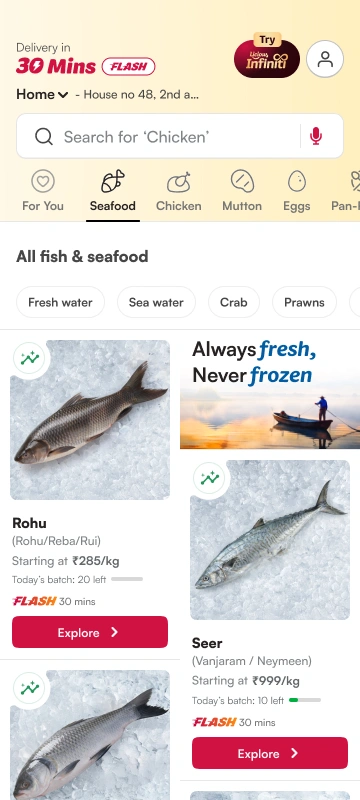
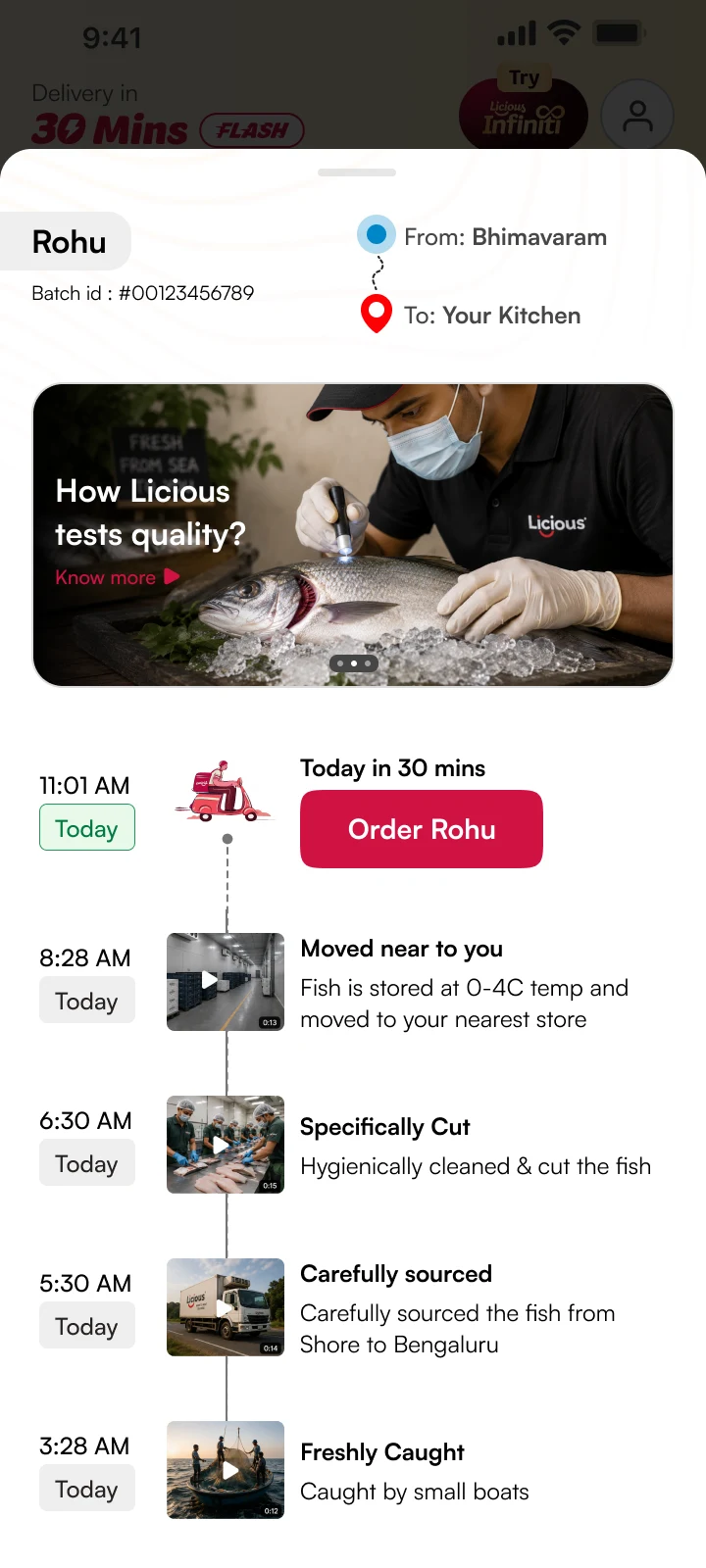
Time + process
“Sourced today” answers when. The timeline opens up what happened along the way.
From source to delivery, timestamps connect how recent with how it was handled.
where it’s been, before it gets to you.Senses
At the counter, people look at the fish before deciding. A standard catalogue image cannot tell them what the current batch looks like.
A photo of a randomly selected fish shows the batch’s eyes and gills for people to inspect.
A batch sample, not the exact fish in the order. It brings the visual check online; it cannot replace touch or smell.
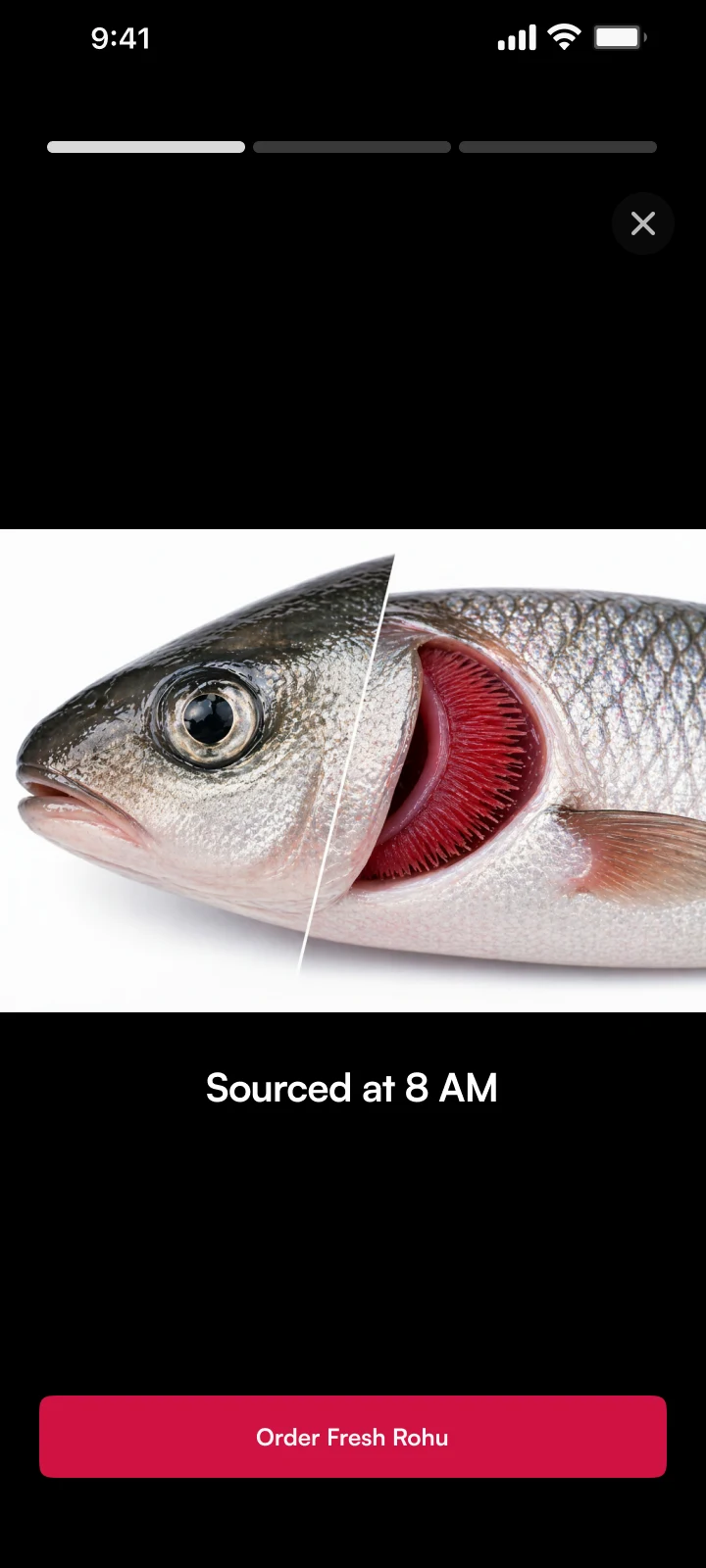
Two ways to check while shopping: hear from customers, or look closer at the fish and its journey.
FnS page Customer story
Product card Timeline Quality story / fish photo
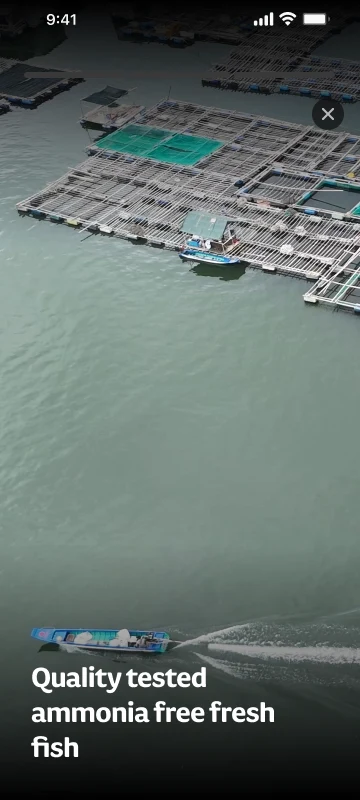
What this project asked of me
The work started before there was a feature to design. I had to turn an ambiguous word into a direction, and carry that direction through the details of the interface.
Let’s connect